How to Order Food at a Korean Restaurant
How ordering actually works at a Korean restaurant — banchan, calling a server, common menu words, and paying.
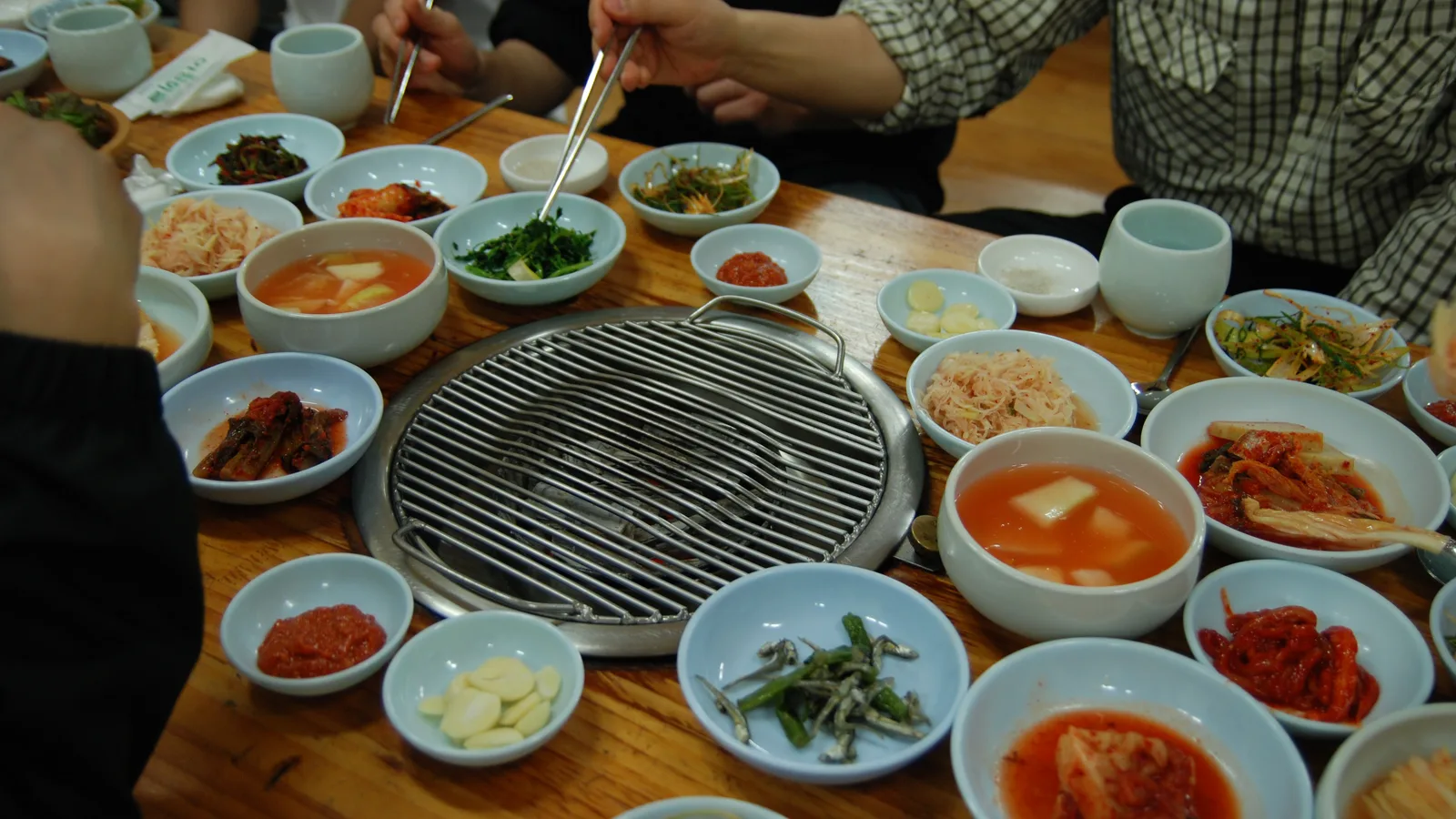
Ordering at a Korean restaurant works a little differently from what you might be used to. This covers the mechanics — side dishes, calling a server, common words, and paying.
Banchan and how they work
At most restaurants, banchan side dishes are brought automatically once you order your main dish, at no extra charge, and refills are normal to ask for if you finish one you liked — you are not expected to order these separately or ration them.
Getting a server’s attention
Rather than waiting to be checked on, it is standard practice to call a server over verbally — a polite “yeogiyo” (여기요, roughly “over here”) works in almost any restaurant — or to press a table call-button where one is provided. This is normal, expected behavior, not rude.
A few useful menu words
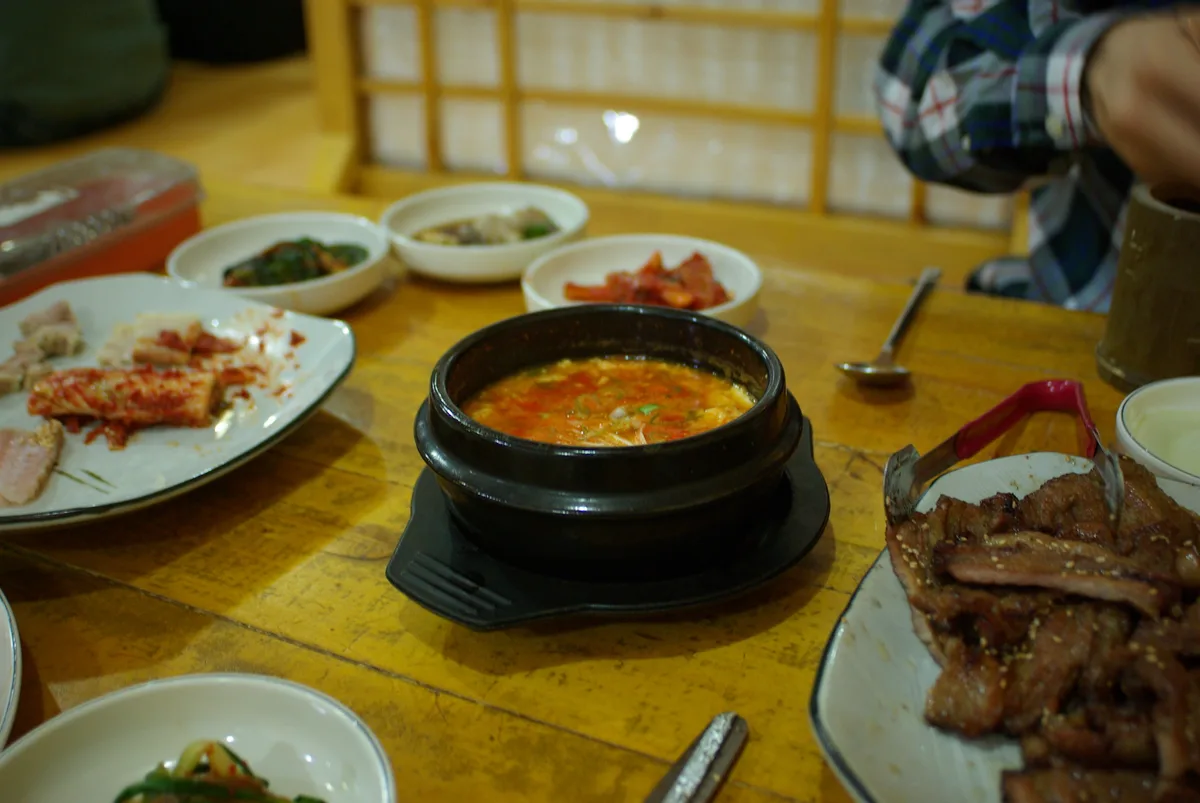
- Rice — 밥 (bap)
- Soup / stew — 국 / 찌개 (guk / jjigae)
- Grilled meat — 구이 (gui)
- Spicy — 매운 (maeun)
- Water — 물 (mul)
- The bill, please — 계산해 주세요 (gyesanhae juseyo)
Romanization above follows the official Revised Romanization system from South Korea’s National Institute of Korean Language.
Paying
At most casual and mid-range restaurants, you pay at a counter near the entrance on your way out rather than at the table, though some restaurants do bring the bill to the table — if you are unsure, “gyesanhae juseyo” (계산해 주세요) works either way.
Where to go from here
The restaurant etiquette guide covers the table manners around this ordering process — how seating, sharing dishes, and pouring for others typically work once the food arrives.
Sources
- About Korean Food — Korea Tourism Organization (accessed )
- Romanization of Korean — National Institute of Korean Language (accessed )