US Now
The August 2026 Total Solar Eclipse: What Actually Happened, and What Comes Next
A total solar eclipse crossed the Arctic, Greenland, Iceland, and Spain on August 12, 2026 — Europe's first since 1999 and Spain's first since 1905. Here's what happened, where totality lasted longest, how weather split the outcome, and when the next total eclipse arrives in 2027.
What happened on August 12
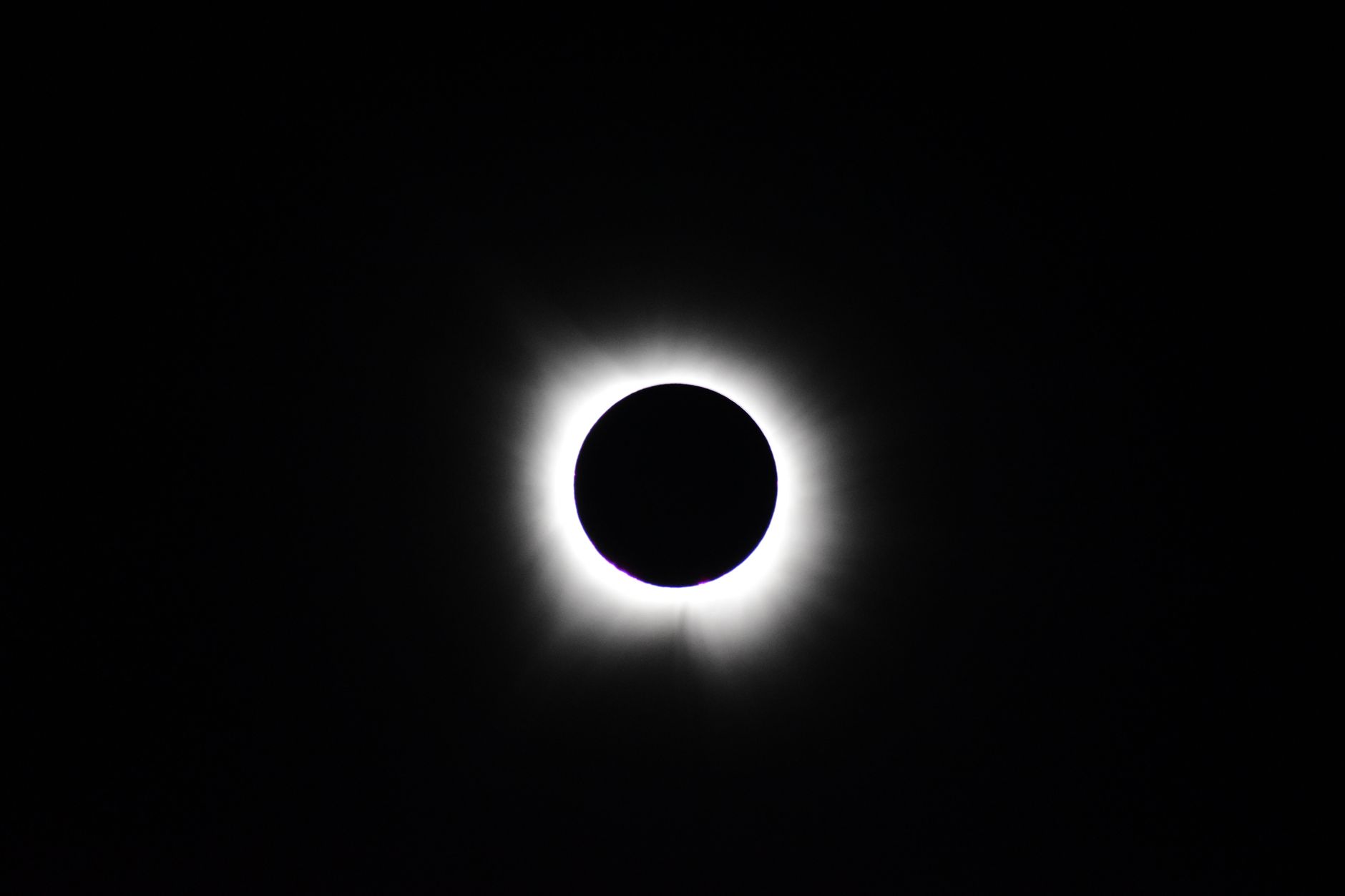
Two days ago, the Moon’s shadow swept across the top of the world in a real, physical line — the Arctic, Greenland, Iceland, and down onto mainland Europe, crossing Spain and a small corner of Portugal, with a partial eclipse visible across much of the rest of the Northern Hemisphere. It was a total solar eclipse, the kind where the Moon lines up precisely enough with the Sun to block it completely for a few minutes, turning day briefly into a strange, cool twilight and revealing the Sun’s pale corona around a black disk where the Sun should be.
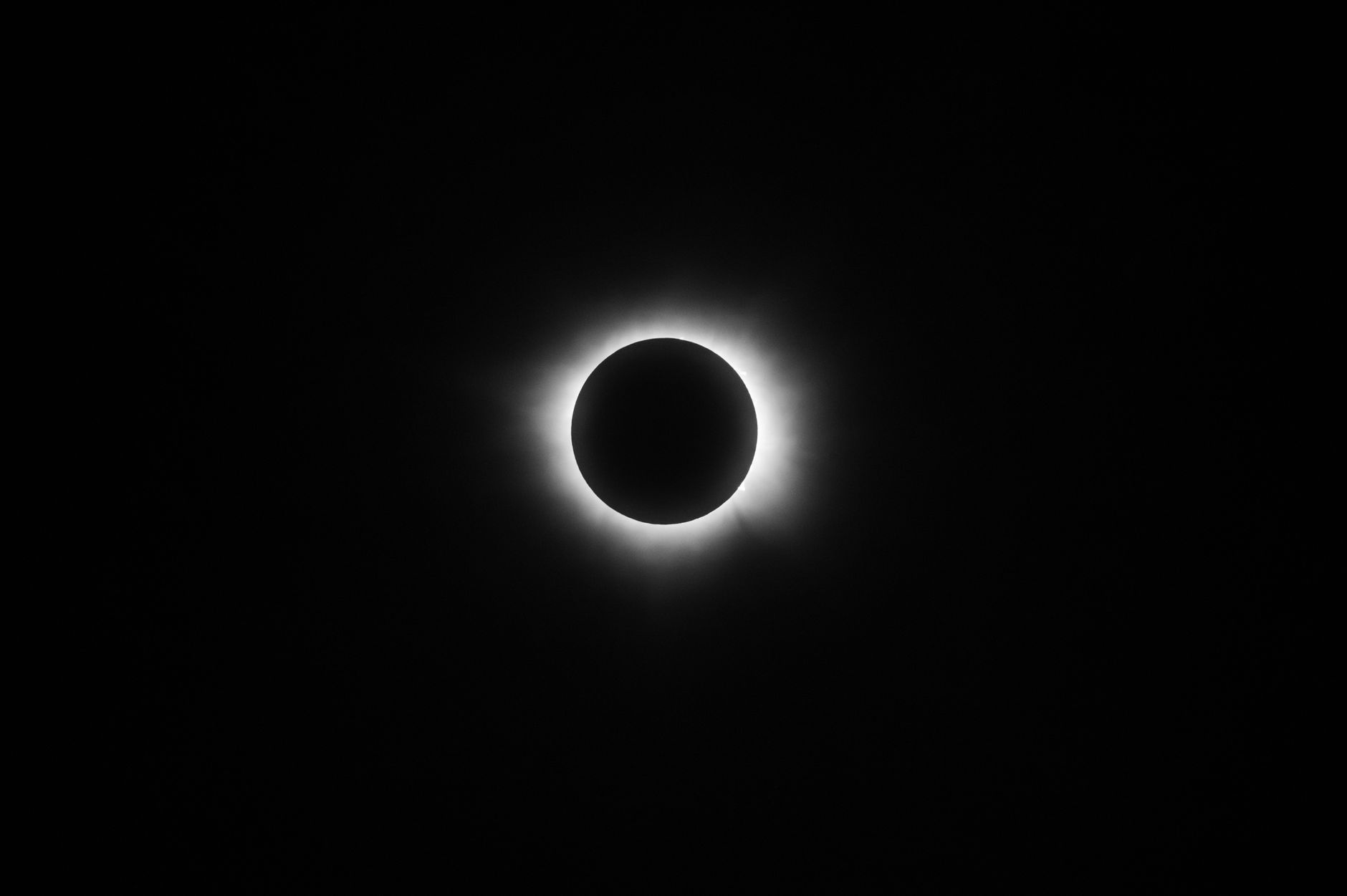
For everyone standing inside that narrow band — the path of totality — the eclipse was total. Step even a little outside it, and the Sun never fully disappeared; it just narrowed to a thinning crescent before growing back. That’s the difference between a total eclipse and the much more common partial one, and it’s why so much planning, travel, and forecasting goes into being in exactly the right place at the right time.
Why this eclipse was historic
Total solar eclipses aren’t rare in the sense of happening infrequently — one occurs somewhere on Earth roughly every 18 months. What’s rare is one crossing a specific, populated stretch of land you happen to live near. This was the first total solar eclipse to reach mainland Europe since August 11, 1999, when the shadow cut across the continent from France to Bulgaria. For Spain, the wait was even longer: the country’s national geographic institute confirmed this was Spain’s first total solar eclipse in more than a century — since August 30, 1905.
Analysis: that century-long gap is the actual reason this eclipse became a story at all, beyond the astronomy. A total eclipse’s path is only about 100-200 km wide, so most of the planet, most of the time, is outside it. Being inside it once in a working lifetime is the exception, not the rule — which is why people plan vacations, and in Spain’s case, entire regional tourism campaigns, around a few minutes of darkness.
Where totality lasted longest
Totality wasn’t the same length everywhere along the path — it grows and shrinks depending on exactly how the Moon, Sun, and Earth line up at each point. The single longest stretch of darkness, 2 minutes and 18.2 seconds, fell at the point of greatest duration roughly 45 km off Iceland’s west coast — over open water, not over any city.
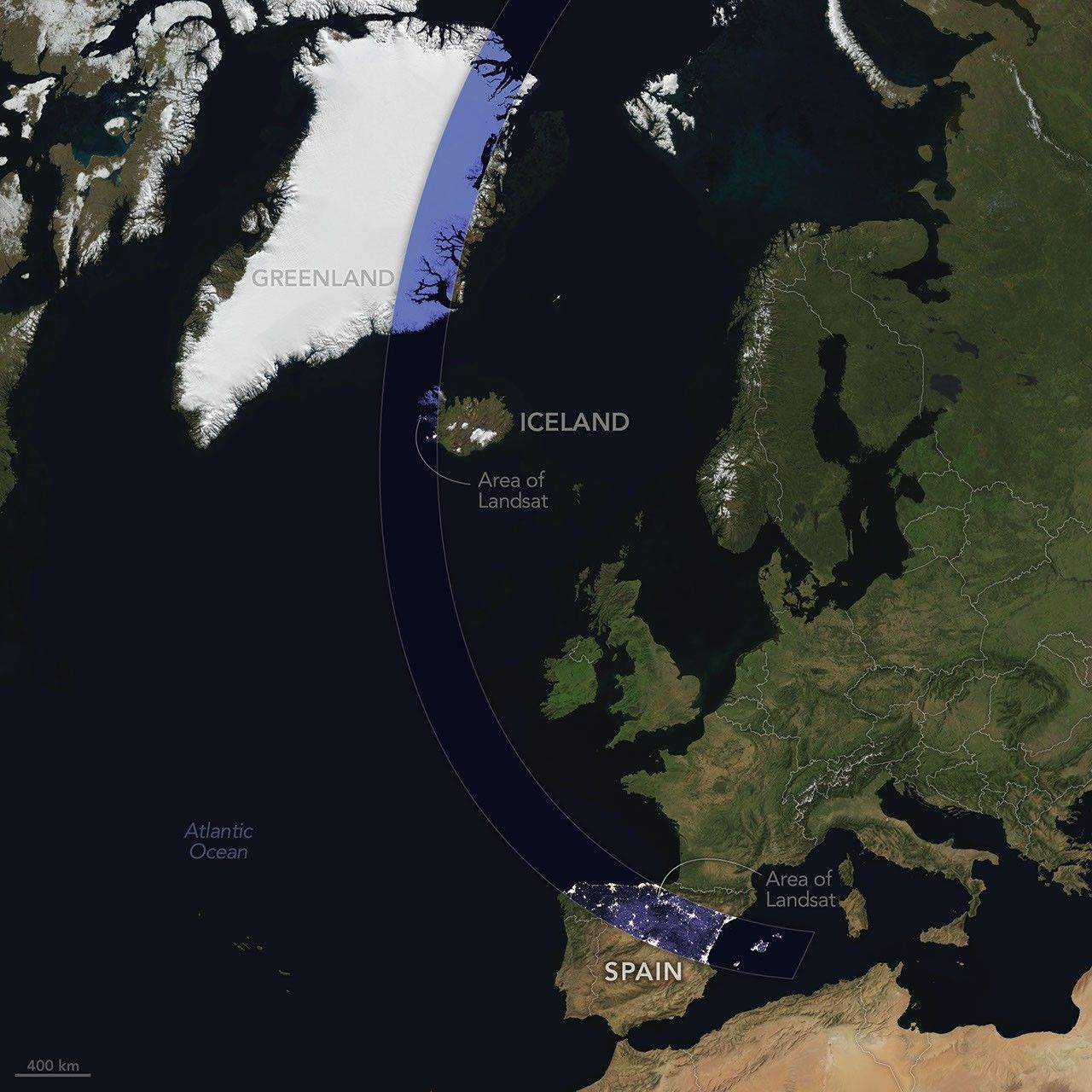
On land, Spain got the eclipse’s biggest population centers. The path of totality crossed several provincial capitals, including A Coruña, Oviedo, León, Bilbao, Zaragoza, Valencia, and Palma — meaning millions of residents didn’t need to travel anywhere to stand in the shadow’s center; the eclipse came to them.
Clouds, heat, and who actually saw it
Being in the path is only half of it. The other half is whether the sky actually cooperates, and on August 12 the two ends of the path had opposite problems.
Iceland’s problem was cloud. The Icelandic Meteorological Office’s own forecasts called for cloudy conditions across most of the country during the eclipse, with the best chance of gaps in the cloud cover well to the northwest, around Breiðafjörður and the Westfjords — not around Reykjavík, where most of the country’s population actually lives.
Spain’s problem was heat. AEMET, the state weather agency, issued orange-level heat alerts for ten of Spain’s autonomous communities around eclipse day, with highs forecast at 36-40°C in parts of the Guadalquivir and Ebro valleys. Heat and cloud aren’t the same thing, though, and on sky conditions specifically, AEMET’s own historical cloud-frequency analysis — built from fifteen years of data for that time of year, not a real-time forecast — flagged the Cantabrian coast (Galicia, Asturias, Cantabria, the Basque Country) as the highest-risk stretch, with historically only a 30-50% chance of clear skies during eclipse hours. Areas further along the path’s interior, including Castilla y León and the Ebro valley near Zaragoza, carried noticeably better odds, in the 50-70% range.
Analysis: put together, the two forecasts pointed toward a familiar eclipse-chasing pattern: the people with the shortest trip to totality (Reykjavík, the Cantabrian coast) weren’t necessarily the ones most likely to see it clearly, while inland Spain — hot, dry, and further from the coastal cloud machine — had the better shot at an unobstructed view despite the heat advisories.
The crowds it drew to Spain
The scale of interest showed up in the numbers Spain’s government released. The country’s Ministry of Economy, Commerce and Enterprise estimated the eclipse drew about 446,700 extra visitors into the country in the week of August 10-16, adding roughly €347.6 million to the economy — a figure confirmed separately by Hosteltur, Spain’s tourism trade press.
Zoom out further and the numbers get planetary: news estimates put roughly one billion people worldwide under at least a partially darkened sky during the event, with about 15 million living inside the path of totality itself — meaning tens of millions more traveled deliberately to join them.
The next total eclipse: Egypt, 2027
Anyone who missed it, or watched a partial eclipse from behind cloud, doesn’t have to wait long by eclipse standards. The next total solar eclipse falls on August 2, 2027, tracking across southern Spain, Gibraltar, Morocco, Algeria, Tunisia, Libya, Egypt, Saudi Arabia, Somalia, and Yemen.

That one is shaping up to be unusually significant in its own right. NASA’s calculations put the greatest duration at 6 minutes and 23.2 seconds near the center of the path, and Sky & Telescope notes that’s a stretch of totality nothing on accessible land is expected to beat until June 3, 2114. Much of that longest stretch falls over Egypt, near Luxor, putting one of the ancient world’s most recognizable temple complexes directly under more than six minutes of daytime darkness.
Analysis: six minutes is enormous by eclipse standards — 2026’s Iceland maximum barely cleared two — and it’s the main reason 2027 is already being talked about as a career eclipse for photographers and travelers, rather than just the next one on the calendar.
Sources
- Total Solar Eclipse on August 12, 2026 — NASA (accessed )
- NASA — Total Solar Eclipse of 2026 Aug 12 (path, greatest duration) — NASA Goddard Space Flight Center (accessed )
- NASA — Total Solar Eclipse of 1999 August 11 — NASA Goddard Space Flight Center (accessed )
- NASA — Total Solar Eclipse of 2027 Aug 02 (path, greatest duration) — NASA Goddard Space Flight Center (accessed )
- Total solar eclipse, August 12, 2026 — Instituto Geográfico Nacional (Spain) (accessed )
- Two eclipses that made history in Spain — Instituto de Astrofísica de Canarias (IAC) (accessed )
- Aviso especial. Ola de calor (special heatwave warning) — AEMET — Agencia Estatal de Meteorología (Spanish Government) (accessed )
- ¿Estará despejado el día del eclipse de 2026? — AEMET — Agencia Estatal de Meteorología (Spanish Government) (accessed )
- Solar eclipse area — Forecasts / cloud cover for the 12 August eclipse — Icelandic Meteorological Office (Veðurstofa Íslands) (accessed )
- 10 Things About the August 2026 Total Solar Eclipse — timeanddate.com (accessed )
- Luxor 2027: A Total Solar Eclipse for the Ages — Sky & Telescope (accessed )
- España hace caja con el eclipse: genera un impacto económico de 347 millones y la llegada de 446.700 turistas — Infobae (reporting Ministerio de Economía, Comercio y Empresa figures) (accessed )
- El eclipse de sol aportará 347 M€ a la economía española y 446.700 turistas más esta semana — Hosteltur (reporting Ministerio de Economía, Comercio y Empresa figures) (accessed )